



Calcium Channel
Ca2+ channels; Ca channels
Calcium channel is an ion channel which displays selective permeability to calcium ions. It is sometimes synonymous as voltage-dependent calcium channel, although there are also ligand-gated calcium channels. Voltage-gated calcium (CaV) channels catalyse rapid, highly selective influx of Ca2+ into cells despite a 70-fold higher extracellular concentration of Na+. Some calcium channel blockers have the added benefit of slowing your heart rate, which can further reduce blood pressure, relieve chest pain (angina) and control an irregular heartbeat.
Calcium Channel Isoform Specific Products
All Product Categories
-
Calcium Channel Inhibitors
(593)
View all products
-
Calcium Channel Agonists
(35)
View all products
-
Calcium Channel Antagonists
(209)
View all products
-
Calcium Channel Activators
(88)
View all products
-
Calcium Channel Modulators
(45)
View all products
-
Calcium Channel Chemical
(1)
View all products
-
Calcium Channel Inducers
(12)
View all products
-
Calcium Channel Controls
(10)
View all products
-
Calcium Channel Ligands
(7)
View all products
-
Calcium Channel Related Products (1237)
Related Products (1237)

-
Antibodies (29)
-
Related Compound Screening Libraries (1)
-
Calcium Channel Isoform Comparison
-
Norfluoxetine
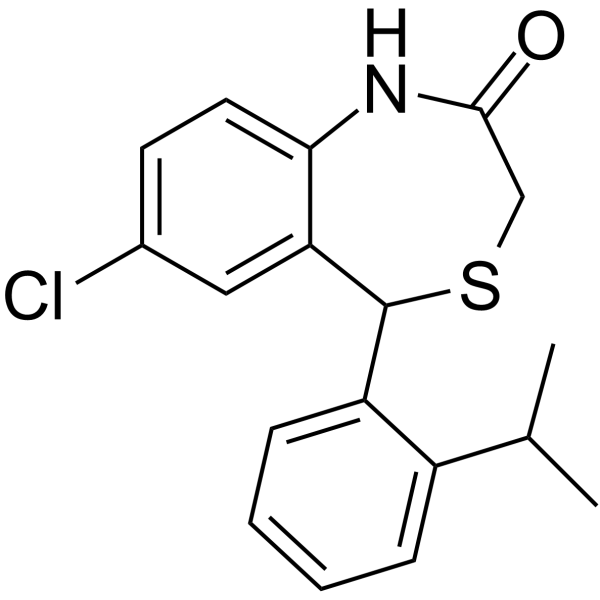
 0 ImagesNorfluoxetine is the active metabolite of the antidepressant Fluoxetine (HY-B0102); it is also a TREK-2 K2P potassium channel inhibitor. Norfluoxetine exhibits neuroimmunological activity, induces apoptosis in primary microglial cells, and inhibits the release of pro-inflammatory factors. Norfluoxetine inhibits high-threshold voltage-gated Ca2+ currents in neurons with an EC50 of 20.4 μM. Norfluoxetine can be used in research related to depression, ischemic stroke, and epilepsy.
-
Yoda2
 0 ImagesSynonyms: KC289Yoda2 (KC289), the potassium salt of Yoda1 (HY-18723), is a PIEZO1 agonist with an EC50 of 150 nM. Yoda2 evokes Ca2+ elevation and NO-dependent relaxation. Yoda2 induces relaxation in mouse arterial and cavernous tissues. Yoda2 inhibits glucocorticoid-induced osteoclast formation and bone resorptive activity, reverses glucocorticoid-induced bone density loss and architectural deterioration, and does not induce medication-related osteonecrosis of the jaw in mice. Yoda2 can be used for the researches of hypertension and osteoporosis.
-
D-myo-Inositol-1,3,4,5-tetraphosphate sodium
 0 ImagesD-myo-Inositol-1,3,4,5-tetraphosphate sodium is formed by the phosphorylation of Ins(1,4,5)P3 by inositol 1,4,5-triphosphate 3-kinase.
-
8-Br-NAD+ sodium
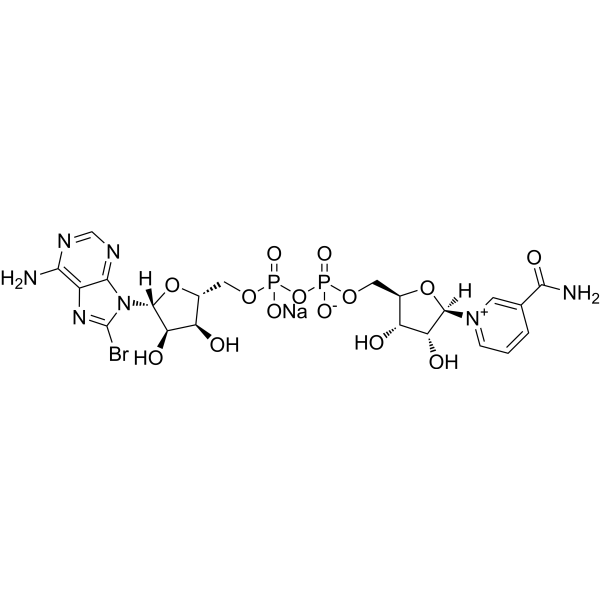 0 Images8-Br-NAD+ sodium is an NAD+ derivative that acts as a substrate for transfer to diversely modified ADP-ribosylated molecules.
-
L-Phenylalanine-3-13C
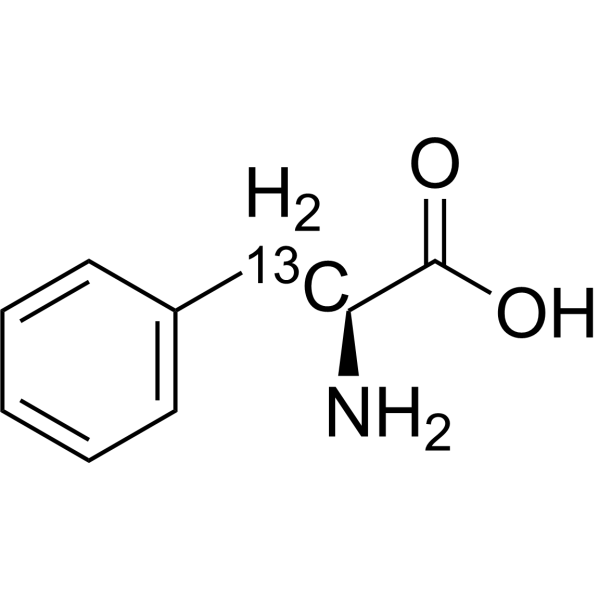 0 ImagesSynonyms: (S)-2-Amino-3-phenylpropionic acid-3-13CL-Phenylalanine-3-13C is the 13C-labeled L-Phenylalanine. L-Phenylalanine ((S)-2-Amino-3-phenylpropionic acid) is an essential amino acid isolated from Escherichia coli. L-Phenylalanine is a α2δ subunit of voltage-dependent Ca+ channels antagonist with a Ki of 980 nM. L-phenylalanine is a competitive antagonist for the glycine- and glutamate-binding sites of N-methyl-D-aspartate receptors (NMDARs) (KB of 573 μM ) and non-NMDARs, respectively. L-Phenylalanine is widely used in the production of food flavors and pharmaceuticals.
-
Prenylamine
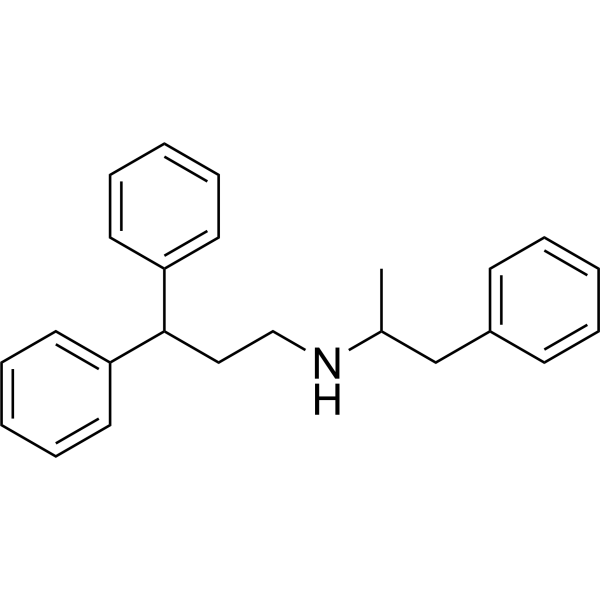 0 ImagesPrenylamine is a calcium channel blocker of the amphetamine chemical class. Prenylamine can be used as a vasodilator and can be used for the research of angina pectoris.
-
L-Phenylalanine-d2
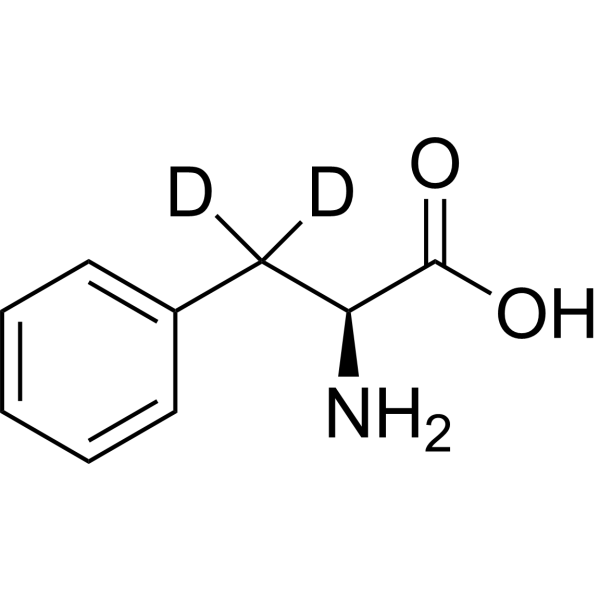 0 ImagesSynonyms: (S)-2-Amino-3-phenylpropionic acid-d2L-Phenylalanine-d2 is the deuterium labeled L-Phenylalanine. L-Phenylalanine ((S)-2-Amino-3-phenylpropionic acid) is an essential amino acid isolated from Escherichia coli. L-Phenylalanine is a α2δ subunit of voltage-dependent Ca+ channels antagonist with a Ki of 980 nM. L-phenylalanine is a competitive antagonist for the glycine- and glutamate-binding sites of N-methyl-D-aspartate receptors (NMDARs) (KB of 573 μM ) and non-NMDARs, respectively. L-Phenylalanine is widely used in the production of food flavors and pharmaceuticals.
-
(+)-Kavain
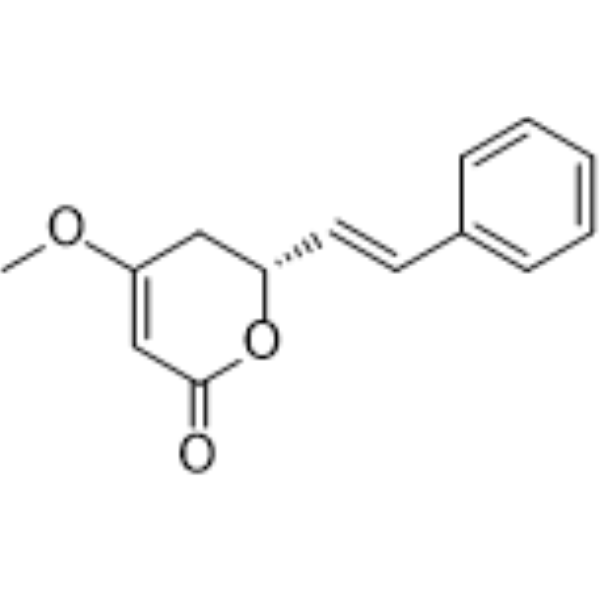 0 Images(+)-Kavain, a main kavalactone that can be extracted from Piper methysticum, has anticonvulsive properties, attenuating vascular smooth muscle contraction through interactions with voltage-dependent Na+ and Ca2+ channels. (+)-Kavain is shown to bind at the α4β2δ GABAA receptor and potentiate GABA efficacy. (+)-Kavain is used as a treatment for inflammatory diseases, its anti-inflammatory action has been widely studied.
-
L-Ascorbic acid-13C
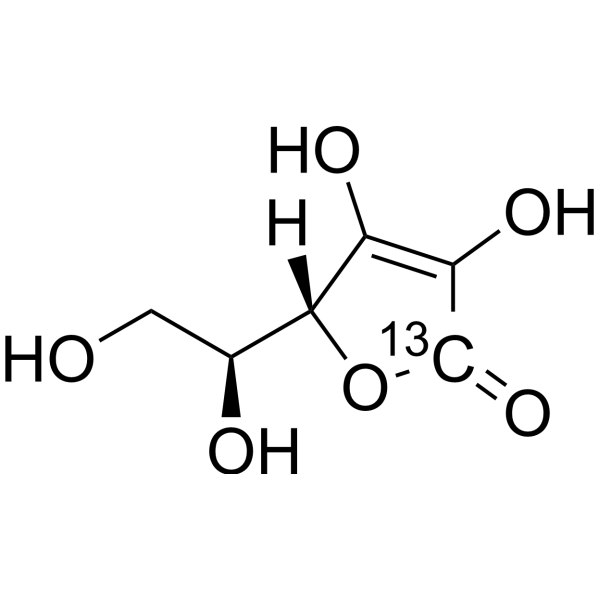 0 ImagesSynonyms: L-Ascorbate-13C; Vitamin C-13CL-Ascorbic acid-13C is the 13C-labeled L-Ascorbic acid. L-Ascorbic acid (L-Ascorbate), an electron donor, is an endogenous antioxidant agent. L-Ascorbic acid inhibits selectively Cav3.2 channels with an IC50 of 6.5 μM. L-Ascorbic acid is also a collagen deposition enhancer and an elastogenesis inhibitor. L-Ascorbic acid exhibits anti-cancer effects through the generation of reactive oxygen species (ROS) and selective damage to cancer cells.
-
Cyclic ADP-ribose ammonium
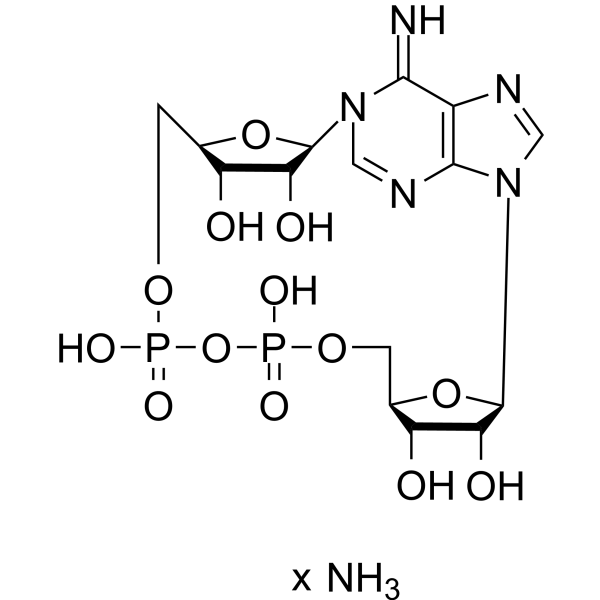 0 ImagesCat. No.: HY-N7395APurity: 99.9%Synonyms: cADPR ammoniumCyclic ADP-ribose ammonium (cADPR ammonium) is a potent second messenger for calcium mobilization that is synthesized from NAD+ by an ADP-ribosyl cyclase. Cyclic ADP-ribose ammonium increases cytosolic calcium mainly by Ryanodine receptor-mediated release from endoplasmic reticulum and also by extracellular influx through the opening of TRPM2 channels.
-
Proadrenomedullin (1-20), human
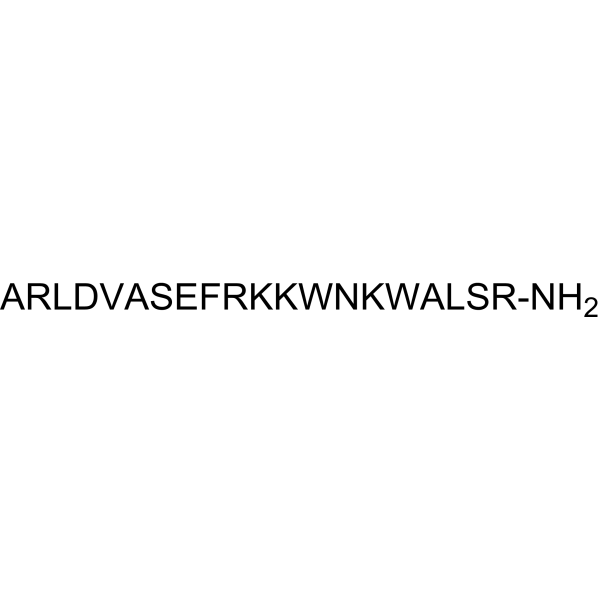 0 ImagesSynonyms: ProAM N20, Human; PAMP-20, humanProadrenomedullin (1-20), human is a potent hypotensive and catecholamine release–inhibitory peptide released from chromaffin cells. Proadrenomedullin (1-20) inhibits catecholamine secretion in PC12 pheochromocytoma cells (IC50 ≈ 350 nM) by suppressing Na+/Ca2+ influx and blocking desensitization. Proadrenomedullin (1-20), human specifically acts on nicotinic cholinergic receptors in a non competitive manner. Proadrenomedullin (1-20), human can be used for research on conditions such as hypertension.
-
DL-Phenylalanine-d5
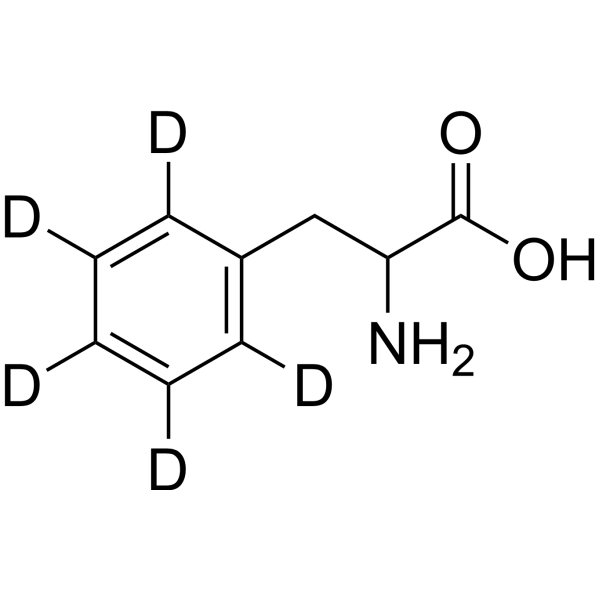 0 ImagesSynonyms: 2-Amino-3-phenylpropionic acid-d5DL-Phenylalanine-d5 is the deuterium labeled DL-Phenylalanine.
-
NP118809
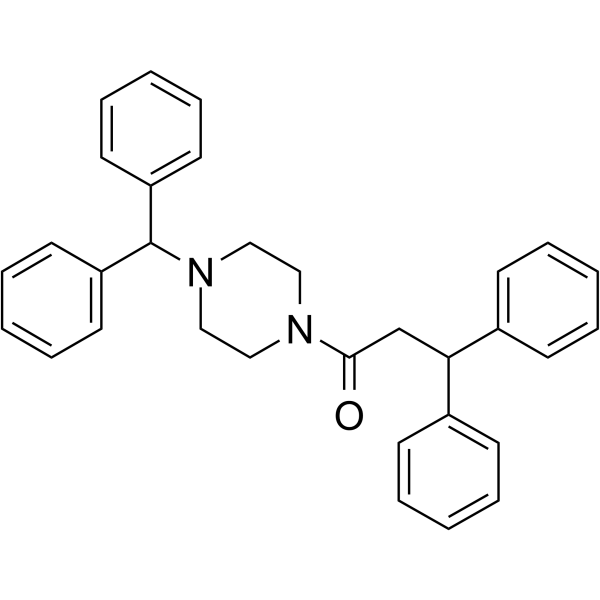 0 ImagesSynonyms: 39-1B4NP118809 is a potent N-type calcium channel blocker, with an IC50 of 0.11 μM; also less potently inhibits L-type calcium channel with an IC50 of 12.2 μM.
-
Katacalcin
 0 ImagesSynonyms: PDN 21Katacalcin (PDN 21) is a potent plasma calcium-lowering peptide.
-
Clonixin
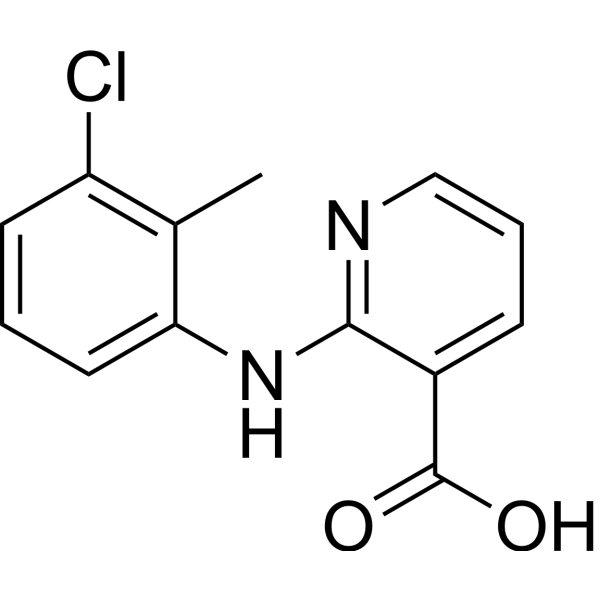 0 ImagesSynonyms: SCH-10304Clonixin (SCH-10304) is an orally active non-steroidal anti-inflammatory agent (NSAID) that inhibits COX synthesis. Clonixin acts as a voltage-gated L-type calcium channel blocker, exerts vasodilatory effects by antagonizing Ca2+ in vascular smooth muscle. Clonixin inhibits TGF-β, reduces lung coefficient, immune cell infiltration level, oxidative stress response, airway resistance, hydroxyproline content and collagen deposition. Clonixin can be used in research related to inflammation such as idiopathic pulmonary fibrosis and moderate to severe pain.
-
(R)-Amlodipine
 0 Images(R)-Amlodipine is the R-Enantiomer of Amlodipine (HY-B0317)
-
PD173212
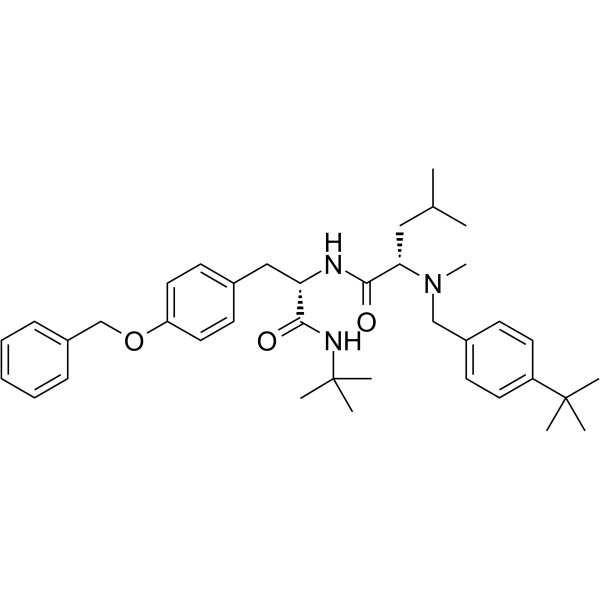 0 ImagesPD173212 is a selective N-type voltage sensitive calcium channel (VSCC) blocker, with an IC50 of 36 nM in IMR-32 assays.
-
Halofuginone lactate
 0 ImagesSynonyms: RU-19110 lactateHalofuginone lactate (RU-19110 lactate), a Febrifugine derivative, is a competitive prolyl-tRNA synthetase inhibitor with a Ki of 18.3 nM. Halofuginone lactate is a specific inhibitor of type-I collagen synthesis and attenuates osteoarthritis (OA) by inhibition of TGF-β activity. Halofuginone lactate is also a potent pulmonary vasodilator by activating Kv channels and blocking voltage-gated, receptor-operated and store-operated Ca2+ channels. Halofuginone lactate has anti-malaria, anti-inflammatory, anti-cancer, anti-fibrosis effects.




